DIMENSIONS
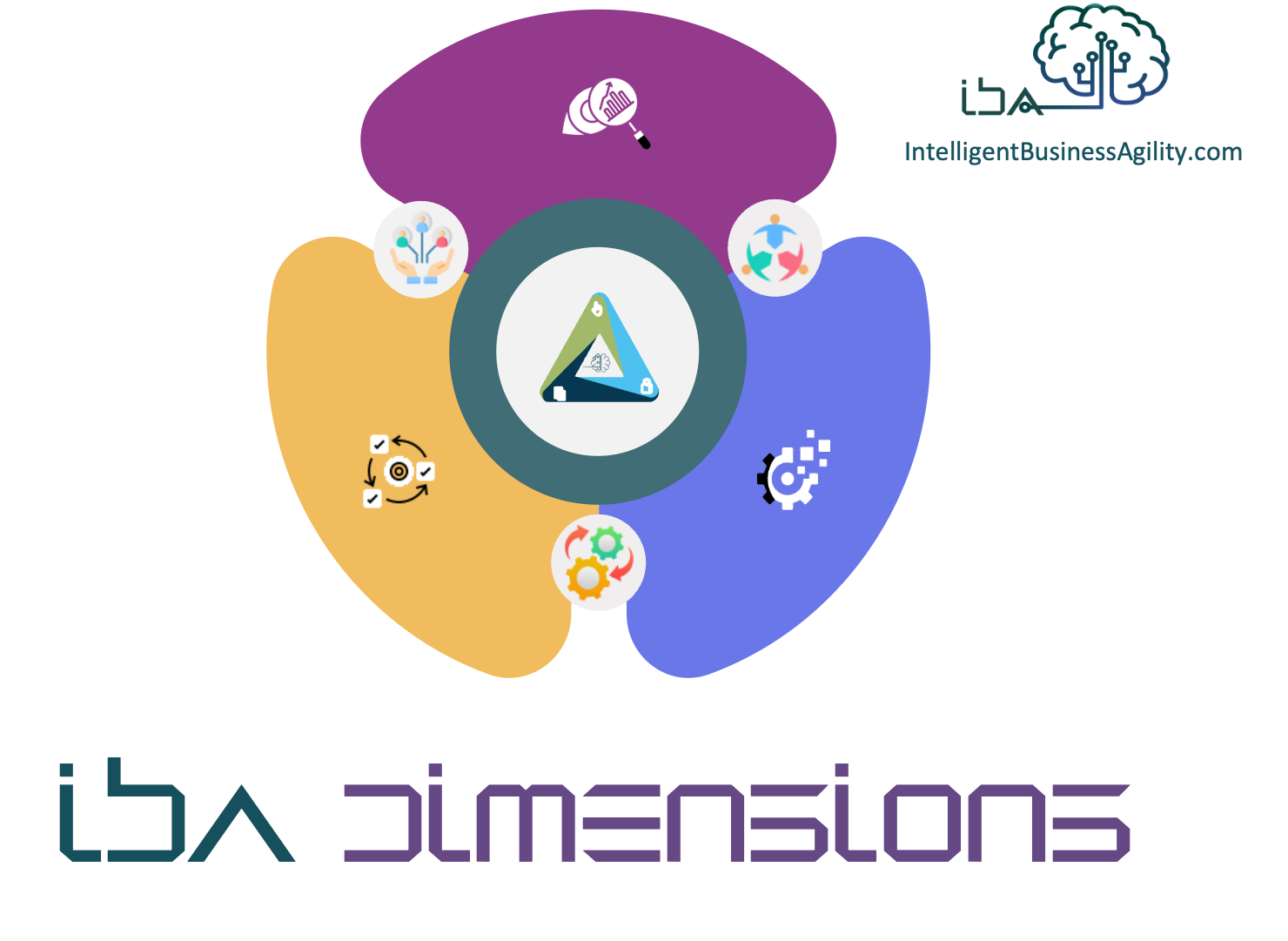
At the core of any proactive and successful business transformation operate four key dimensions. In this new framework, Artificial Intelligence is not just a simple tool, but acts as a valuable "co-pilot" capable of unlocking the maximum potential of human talent. Harmonizing these four areas allows companies to stop chasing continuous market changes and start, instead, strategically anticipating them.
The Intelligence Business Agility is developed on four dimensions, three operational and one digital-social.
HAI AGILITY
THE ADVANCED SYNERGY BETWEEN PEOPLE AND ARTIFICIAL INTELLIGENCE
HAI Agility (Human-Artificial Intelligence Agility) represents the true socio-digital dimension and the beating heart of Intelligent Business Agility.
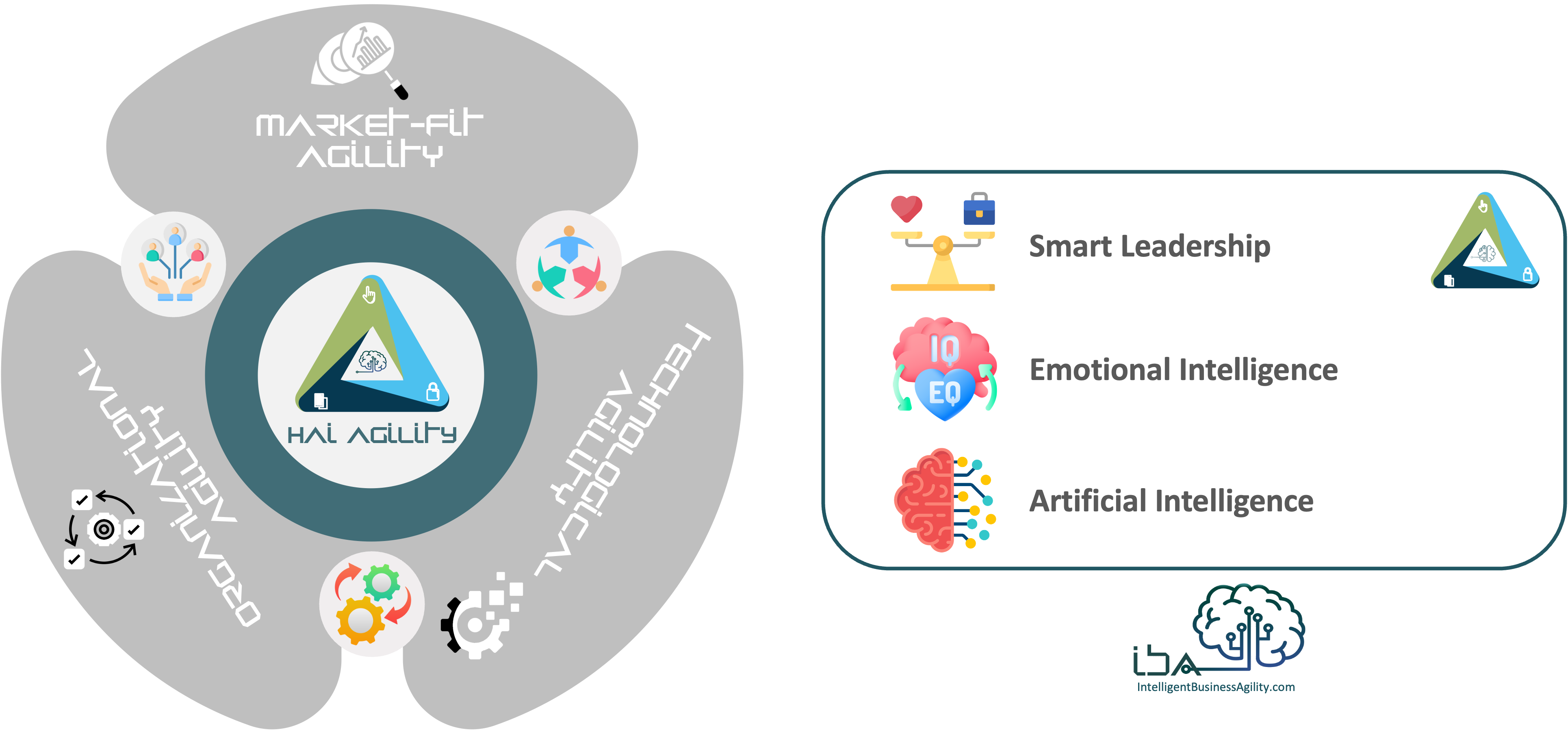
It is not simply the adoption of new IT tools, but an organization's ability to create a deep connection between People and AI Agents, developing a new creative mindset where Artificial Intelligence operates as a trusted co-pilot. In this paradigm, technology is not perceived as a replacement threat, but as an accelerator that frees human resources from repetitive tasks to focus them on highly strategic, value-added activities.
To fully develop this synergy, the dimension is built upon three interconnected pillars:
- Smart Leadership: Leaders abandon micromanagement to focus on vision and trust. By leveraging the analytical capabilities of AI, they make faster, more informed strategic decisions, while promoting an environment of psychological safety where people do not fear innovation.
- Emotional Intelligence (EI): Contrary to what one might think, AI enhances empathy. Through corporate sentiment analysis, managers can early detect signs of stress or dissatisfaction, improving team emotional resilience and the overall customer experience.
- Artificial Intelligence: Delegates operational and low-value-added tasks to AI Agents, optimizing predictive analysis to anticipate trends and prevent inefficiencies.
To concretely measure the success of this integration, the organization must use specific and rigorous metrics. Prominent among these is the AI Adoption Rate (AIAR), which quantifies the percentage of processes supported by AI, aiming for an ideal target above 70%.
The Employee Engagement Index (EEI) is essential to assess whether employees perceive the real added value of technology, aiming for a score above 8 out of 10. Equally crucial are the Emotional Resilience Score (ERS), to monitor turnover and absenteeism deriving from technological stress, and the Data Literacy Index (DLI), which assesses the level of data literacy of the staff and should be maintained at 7.5 out of 10 or higher.
However, the implementation of HAI Agility is not without pitfalls. The greatest risk is AI addiction: a passive dependence that can lead to the loss of critical thinking, where employees stop questioning algorithmic outputs, reducing the culture of innovation to mere bureaucratic execution. The balance lies in keeping human judgment always at the center of the decision-making equation.
MARKET-FIT AGILITY
LEADING THE MARKET THROUGH ANTICIPATION
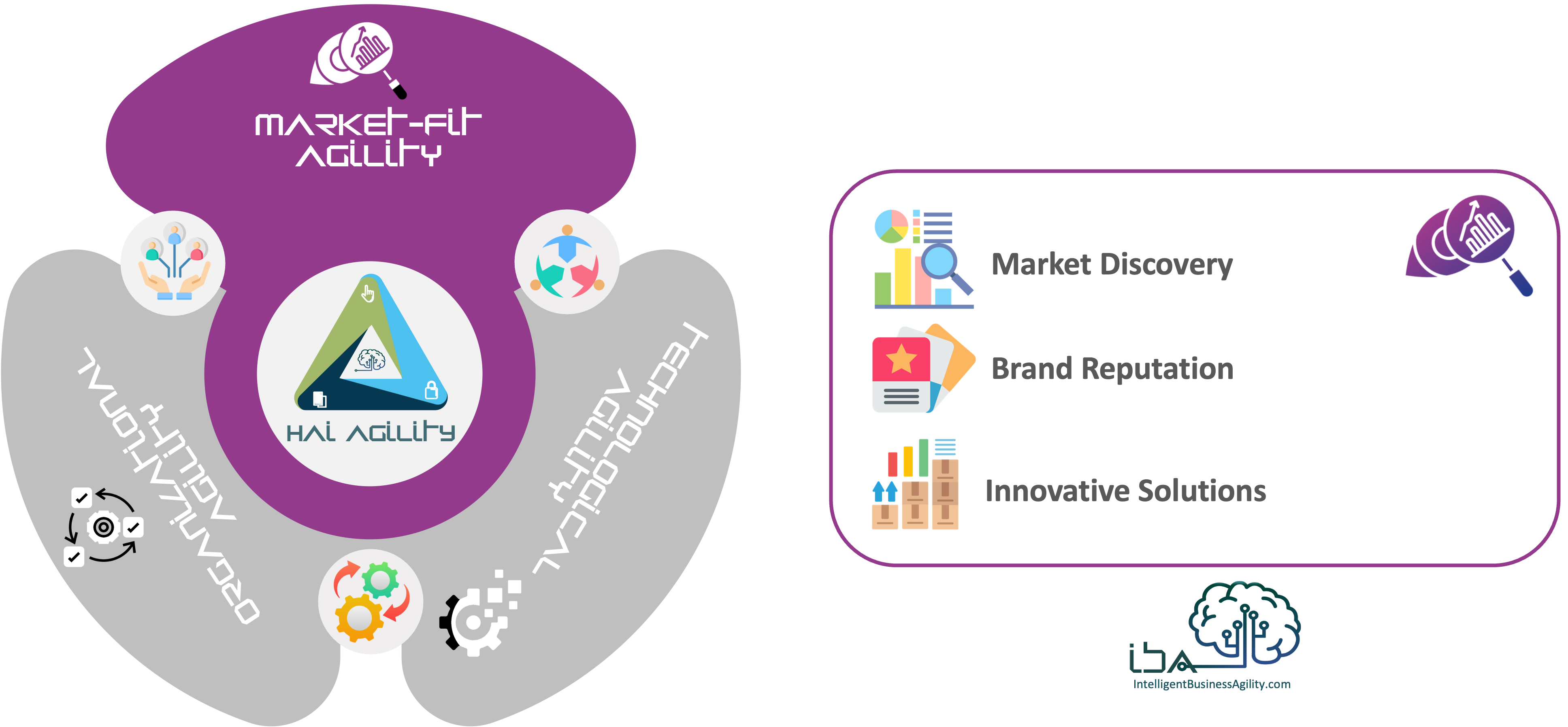
In an economic landscape characterized by volatility, Market-Fit Agility defines a company's ability to stop chasing competitors and start strategically anticipating consumer trends and needs, exceeding their expectations.
An organization lacking this agility risks remaining reactive, losing precious market share to faster, data-driven competitors.
This approach materializes through three fundamental pillars, enhanced by the capabilities of AI Agents:
- Market Discovery: Exploring the market by aggregating structured and unstructured data (such as social media and customer feedback) to identify unserved niches. Predictive analysis allows for the detection of "weak signals" and new trends before they become mainstream.
- Brand Reputation: The continuous monitoring of public sentiment to protect and strengthen brand identity. AI Agents act proactively to prevent reputational crises, suggesting immediate response strategies in case of spikes in negative comments.
- Innovative Solutions: Developing highly personalized products and accelerating time-to-market. The use of simulations and iterative, data-driven design cycles makes it possible to test and validate new ideas (such as Minimum Viable Products), drastically reducing the risk of failure.
The effectiveness of these strategies is monitored through precise indicators. The Market Opportunity Identification Rate (MOIR) measures the ability to identify new opportunities on a quarterly basis, targeting 3-5 new opportunities per quarter. The Customer Retention Rate (CRR) evaluates customer loyalty, aiming for a rate above 80%.
The Brand Sentiment Index (BSI) tracks public perception, targeting at least 70% positive mentions. Finally, the Innovation-to-Revenue Ratio (IRR) calculates what percentage of current revenue comes from products launched in the last three years, with an ideal target above 30%.
The primary risk in this dimension is the loss of empathetic connection with the market. If a company entirely delegates interaction and solution creation to automation, it risks over-standardizing its offerings, losing the ability to respond creatively, empathetically, and deeply humanly to the specific needs of its customers.
ORGANIZATIONAL AGILITY
THE PROACTIVE ECOSYSTEM FOR OPERATIONAL EFFICIENCY
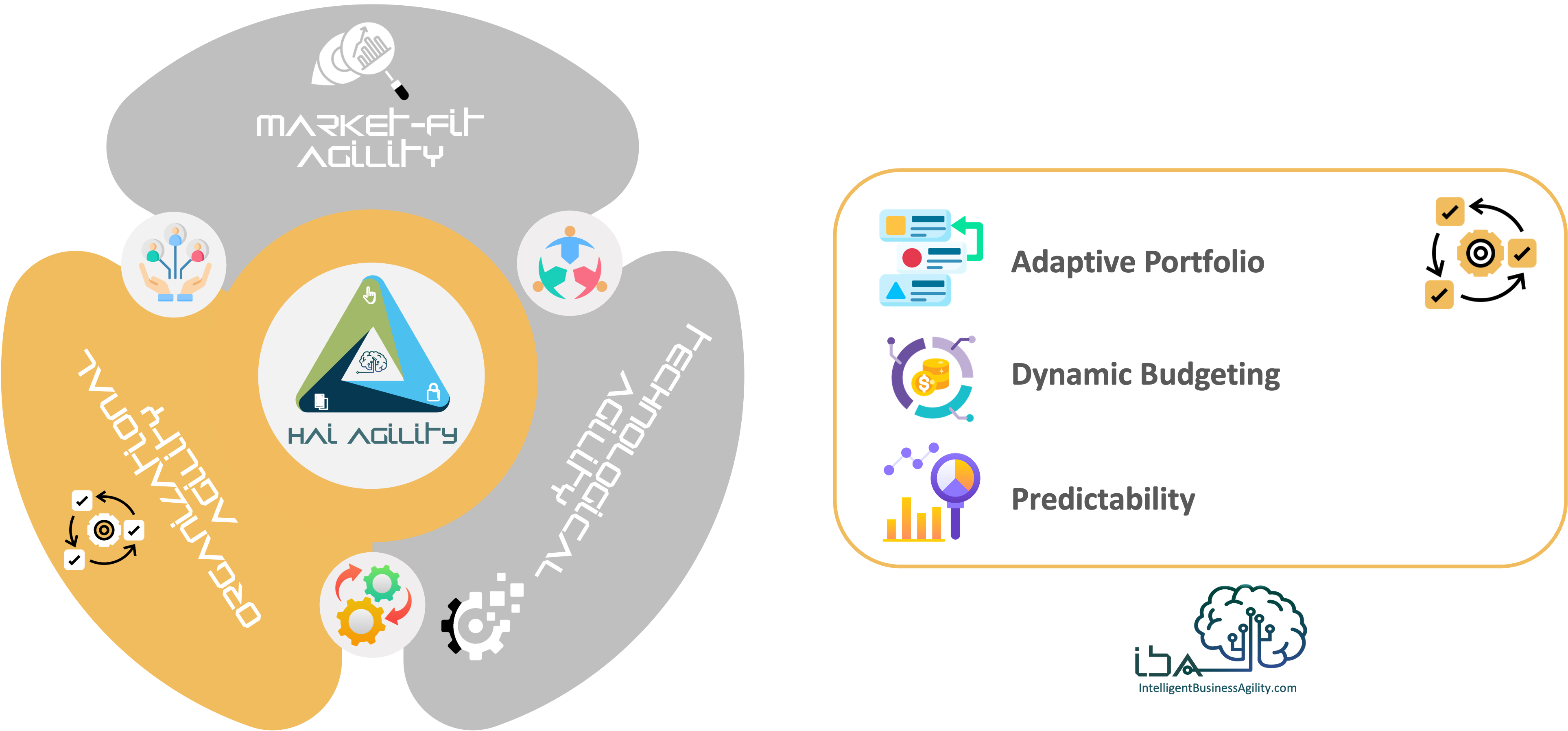
Organizational Agility transforms the traditional, rigid hierarchical structure into a proactive and fluid ecosystem, capable of reorganizing operations and resource allocation in real-time.
By maintaining clear yet flexible governance, decisions are decentralized and data-driven, maximizing chances of success and reducing organizational bottlenecks.
The engine of this organizational agility consists of three elements:
- Adaptive Portfolio: Allows for continuous realignment of corporate priorities. Low-performing initiatives are quickly identified and halted thanks to a "Fail Fast" strategy, while high-potential projects are accelerated ("Fast-Tracking") to maximize strategic value.
- Dynamic Budgeting: Overcomes the obsolescence of the static annual budget. Through techniques like Rolling Forecasts and Zero-Based Budgeting, financial resources are dynamically allocated where they generate the highest return, responding fluidly to new market conditions.
- Predictability: Ensures operational stability in uncertain scenarios. Leveraging predictive maintenance and Demand Forecasting, the company anticipates bottlenecks, demand fluctuations, and financial risks before they manifest.
In this dimension, AI Agents operate as irreplaceable analysts: they simulate investment scenarios for financial decision-makers, optimize expense approvals, and identify inefficiencies in real-time.
Success is measured via metrics such as the Portfolio Alignment Index (PAI) (which verifies project alignment with strategic goals, targeting 80% or more), the Time-to-Pivot (TTP) (the days required to reallocate resources in response to unforeseen events, targeting under 30 days), and Predictability Accuracy (PA) (aiming for over 85% accuracy in business forecasts). Companies anchored to traditional organizational models face severe inefficiency: static budgets and slow decision-making processes expose them to waste and a reduced capacity to innovate in response to external turbulence.
TECHNOLOGICAL AGILITY
BALANCING STABILITY AND CUTTING-EDGE INNOVATION
Technological Agility defines the speed and effectiveness with which an organization adopts, scales, and integrates its digital ecosystem to maintain a sustainable competitive advantage.

It is not just about chasing the latest novelty, but knowing how to harmonize robust infrastructures with pioneering experiments, all while maintaining the highest standards of safety and quality.
The three pillars supporting this technological architecture are:
- Established Technologies: The optimization and maintenance of consolidated technologies. The goal is to guarantee operational continuity, reduce costs, and create smooth integrations (e.g., via APIs or middleware) between old legacy systems and new digital platforms.
- Edge Technologies: The study and strategic adoption of cutting-edge innovations like artificial intelligence, blockchain, and edge computing. This pillar allows the company to transition from a market follower to a pioneer, integrating game-changing solutions.
- Quality: A rigorous focus on high standards. It implies software testing automation, protection against cyber threats (cybersecurity), and the constant fight against "Data Debt".
AI Agents are the fulcrum of this agility: they perform predictive tests before production releases, automate security patches, and monitor infrastructures to prevent downtime via predictive maintenance. Organizations monitor their technological health through vital indicators such as the System Uptime Percentage (SUP) (targeting an uptime above 99.9%), the Adoption Speed for Edge Technologies (ASET) (aiming to implement new tech within 3-6 months), the Defect Reduction Rate (DRR) (targeting a defect reduction of at least 50%), and the Cybersecurity Incident Rate (CIR) (aiming to keep security incidents as close to zero as possible).
A company that neglects this agility inevitably faces technological obsolescence: the inability to manage huge volumes of complex data and the growing burden of maintaining legacy systems will quickly paralyze its growth and competitiveness.
These four dimensions never operate as isolated entities, but rather merge to give life to the "Organizational Galaxy," a vital ecosystem where every element contributes to the success of the whole.
In this galaxy, Artificial Intelligence acts as an invisible force that connects and supports every component, while People remain the irreplaceable beating heart and the primary source of creative energy.
Developing these four agilities in an organic and integrated way means transforming market challenges and uncertainties into the greatest opportunity for success for your company.
Without human intelligence, there is no utility or purpose for artificial intelligence